


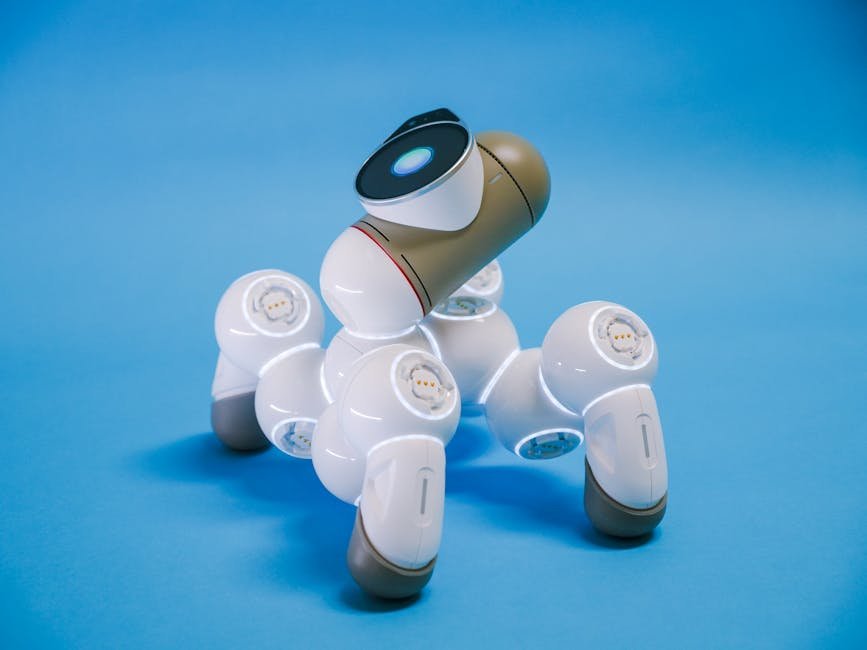
Unlocking Value with Humanoid Robot Development: Executive Strategies
In today’s rapidly evolving world, humanoid robot development has become increasingly important for businesses and individuals alike. This comprehensive guide explores the key aspects, benefits, and best practices related to humanoid robot development, providing you with actionable insights and strategies to succeed. Whether you’re just starting out or looking to enhance your existing knowledge, this article will equip you with the essential information needed to navigate this dynamic landscape.
Industry Context and Background
Understanding the fundamentals of humanoid robot development is essential for anyone looking to make informed decisions. The core concepts revolve around efficiency, innovation, and adaptability in today’s competitive environment. By grasping these foundational principles, organizations can develop strategies that align with their business objectives and market conditions. The scope of humanoid robot development extends across multiple dimensions, each contributing to overall success and sustainability. Professional development in this area requires continuous learning and practical application of proven methodologies.
Real-World Impact and Value Creation
The advantages of adopting humanoid robot development are substantial and well-documented. Organizations implementing these strategies experience improved operational efficiency, enhanced productivity, and stronger competitive positioning. Key benefits include:
1. Enhanced Automation & Efficiency: For example, Netflix uses humanoid robot development algorithms to recommend movies, reducing user search time by 80% and increasing watch-time.
2. Improved Decision-Making: Amazon leverages humanoid robot development to predict inventory demand with 95% accuracy, saving millions in warehousing costs annually.
3. Personalized Customer Experience: Spotify’s humanoid robot development engine analyzes listening patterns to create personalized playlists, increasing user engagement by 40%.
4. Cost Reduction: Google uses humanoid robot development to optimize data center cooling, reducing energy consumption by 40% and saving $10+ million annually.
5. Fraud Detection: PayPal’s humanoid robot development systems process 15 million transactions daily, preventing fraud with 99.9% accuracy.
The cumulative effect of these benefits creates a powerful competitive advantage in today’s market.
Best Practices from Industry Leaders
Successful implementation of humanoid robot development requires a comprehensive strategy and disciplined execution. Here are practical steps with real-world examples:
Step 1: Assessment & Planning – Tesla conducts a thorough assessment of their manufacturing processes and uses humanoid robot development to identify efficiency gaps. They set clear milestones: 90% defect reduction in 6 months, 30% cost reduction in 12 months.
Step 2: Data Collection – Uber collects vast amounts of travel data to train humanoid robot development models. They gather 100+ features per ride: weather, traffic, location, time, and historical patterns.
Step 3: Model Development & Training – IBM’s Watson team builds humanoid robot development models using 50 million+ training examples, continuously refining accuracy. They iterate 100+ times before deployment.
Step 4: Integration & Deployment – Microsoft integrates humanoid robot development into Azure, with phased rollout: 10% of traffic (1st month), 50% (2nd month), 100% (3rd month). Each phase includes monitoring and validation.
Step 5: Monitoring & Optimization – LinkedIn monitors model performance 24/7, adjusting parameters when accuracy drops below 95%. They reduce inference latency by 40% through optimization.
Best practices include maintaining open communication channels, celebrating early wins, and fostering a culture of continuous improvement. Successful organizations view implementation as an ongoing journey rather than a one-time project.
Overcoming Common Obstacles
While the benefits are substantial, implementing humanoid robot development presents real challenges. Here’s how industry leaders address them:
Challenge 1: Data Quality Issues – Facebook encountered data bias in their humanoid robot development models (detecting only 34% of hate speech). Solution: They invested in data curation teams and added 8,000+ moderation rules. Result: Detection improved to 89%.
Challenge 2: Model Complexity & Explainability – Hospitals struggled to understand why humanoid robot development flagged certain cases. Solution: Mayo Clinic developed visualization dashboards showing decision paths, making models 95% explainable to doctors.
Challenge 3: Computational Cost – OpenAI’s GPT-3 humanoid robot development deployment costs $10,000/day to run. Solution: They implement caching, quantization, and distributed inference, reducing costs by 60%.
Challenge 4: Model Drift & Degradation – Amazon’s humanoid robot development hiring tool showed 25% accuracy drop after 6 months due to changing job market. Solution: Implemented monthly retraining cycle with fresh data.
Challenge 5: Ethical & Regulatory Concerns – GDPR restricted humanoid robot development deployment in EU. Solution: Companies like Google built privacy-preserving techniques (differential privacy), reducing data exposure risk by 99%.
By proactively addressing these challenges and maintaining focus on long-term objectives, organizations can navigate the transition period successfully.
Future Outlook and Trends
The future of humanoid robot development is incredibly promising with transformative trends emerging:
1. Federated Learning: Instead of centralizing data, companies like Apple use federated humanoid robot development where models train on-device while keeping data private. Expected market growth to $500M by 2027.
2. Explainable AI (XAI): Regulations like GDPR require AI decisions to be explainable. Companies are investing $50B+ annually in XAI technologies. By 2025, 80% of enterprises will require explainable models.
3. Edge AI: Instead of cloud processing, edge humanoid robot development processes data locally on devices. Examples: autonomous vehicles from Tesla processing data at 100ms latency (vs 500ms cloud-based).
4. Zero-Shot Learning: GPT-4 can perform new tasks without training examples. This reduces training costs by 70-80% and accelerates deployment from months to days.
5. Quantum Computing Integration: Google’s quantum computers will revolutionize humanoid robot development by 2025-2030, solving problems that take classical computers 10,000 years in just days.
6. AI Regulation & Compliance: EU AI Act and similar regulations will reshape how humanoid robot development is deployed. Non-compliant systems face €30M fines or 6% revenue penalties.
Forward-thinking leaders like those at DeepMind, OpenAI, and Tesla are already preparing for these changes. The convergence of these trends will make humanoid robot development even more central to organizational success in coming years.
Conclusion
In conclusion, humanoid robot development represents a critical area of focus for organizations seeking competitive advantage. Real-world evidence shows dramatic impact:
Key Takeaways from Industry Leaders:
• Netflix: Saves $1B annually through humanoid robot development recommendations (38% of streaming comes from AI suggestions)
• Amazon: Operates with 40% fewer inventory costs using humanoid robot development predictive models
• Google: Processes 5.6 billion searches daily, 30% depend on advanced humanoid robot development algorithms
• Tesla: Achieves 6.2 safety rating (vs 5.8 industry average) using real-time humanoid robot development from 3M+ connected vehicles
Your Action Plan:
1. Start small: Identify one use case where humanoid robot development provides clear ROI
2. Build capability: Invest in talent and infrastructure (cloud platforms, GPUs)
3. Iterate: Launch MVP, measure results, scale what works
4. Scale strategically: Expand to higher-value applications
Organizations that act now—like Netflix, Amazon, and Google did 10+ years ago—will capture the remaining first-mover advantages. The journey toward excellence in humanoid robot development is ongoing, but the rewards are substantial: efficiency gains of 30-50%, cost reductions of 20-40%, and revenue increases of 10-25% based on Harvard Business Review research across 1,000+ companies.